The Russian affair
In a nutshell
David Walsh uncovers Russian state-sponsored doping after the 2014 Sochi Olympics and the story of Vitaly Stepanov, who helped expose the fraud. It wasn't a failure of individuals but of an entire state. The book is truly worth reading.
Who it's for: Readers interested in the inside story of elite sport and doping.
Do you remember the 2014 Winter Olympics, the ones held in Sochi? They ended in huge success for Russian athletes. Putin could rub his hands contentedly in his VIP box. Mission accomplished. After the debacle in Vancouver, Russia won the most medals. It was shining again. And then it all burst.
The World Anti-Doping Agency (WADA) launched a large-scale investigation that revealed a systematic failure of the Russian state bodies that were supposed to fight doping. The opposite was true. What elsewhere in the world were isolated failures of individuals or small training groups was state-run in Russia. WADA only published its report in 2016. But it had been receiving the first information about massive doping since 2009, straight from the source: an employee of RUSADA, the Russian anti-doping agency.
The book begins with a meeting between the author, British journalist David Walsh, and Vitaly and Yuliya Stepanov. The go-between was German journalist Hajo Seppelt, whose documentary on doping in Russia set off an avalanche of investigations. The main heroes of the story were Vitaly and Yuliya. Who are they?
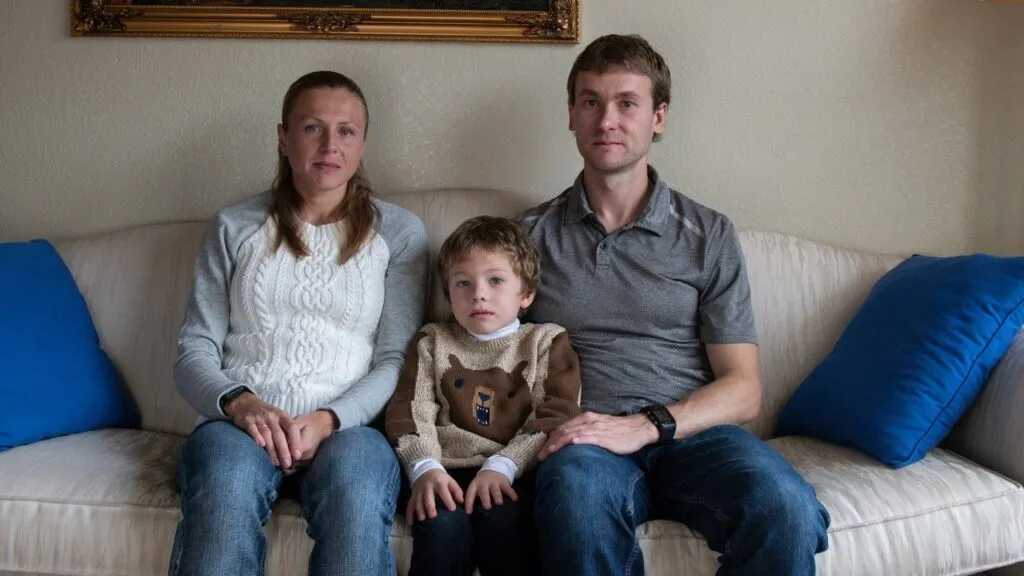
The first part of the book is devoted to Vitaly. After school, his parents sent him to America for experience. He’s lying in a hotel in Manhattan, New York. He overslept and missed an appointment at a bank in the WTC. Luckily. It was 11 September 2001, and the first plane had just hit the Twin Towers. Before long, Vitaly returns to Russia full of optimism. He’s an enthusiastic amateur runner (a 2:41 marathon) and soon gets a job as a doping control officer at RUSADA. He’s an idealist and soon hits a wall. This Russian anti-doping agency was set up to combat doping. The reality was the exact opposite: doping had to be covered up. Gradually he uncovers an elaborate system. Athletes are sorted into castes according to their performance. Those with potential are protected from the very top. Those without potential become victims of the system. Literally. Quotas have to be met, both for tests carried out (to draw funding) and for reported doping cases. This is something Vitaly cannot and will not accept.
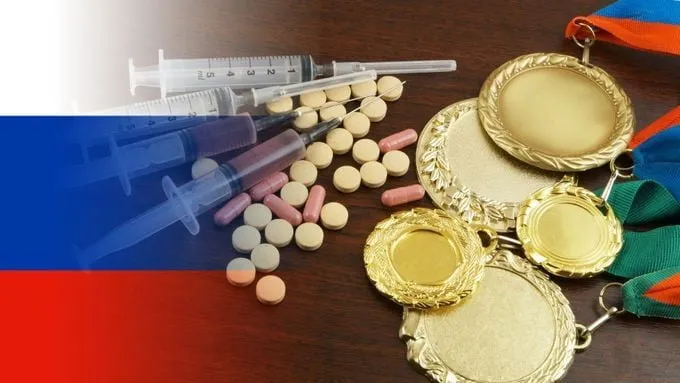
Doping on the Russian scene
Lots of Russian names start to appear in the book, and you need to read really carefully. One name you won’t forget is Yuliya Rusanova. Two months after meeting Vitaly, she becomes his wife. The two could not have been more different. She is a pure pragmatist, he a dreamer. She dopes, he fights doping. Yuliya is an athlete with potential. She talks openly about the doping that helps her get better results. Her and everyone else. Vitaly discovers a reality he is not willing to accept. He makes contact with people at WADA and starts sending information about the enormous scale of doping. Times change faster in Russia than anywhere else. The Sochi Games are approaching and RUSADA needs to work better, from the point of view of state interest. The agency’s director, Sinev, and many employees are dismissed. Vitaly tries to push WADA into action. Without success. It’s a huge machine governed by its own internal rules.
The first change came with athletes’ biological passports. For decades, doping had been managed according to how effective a substance was and how quickly the body could eliminate it before a test. The testing system changed: detailed blood profiles and the relationships between values began to be monitored. Yuliya, too, was caught in the net. How is that possible? She had paid for protection from the athletics federation. She gradually discovers she wasn’t in the top category. She hadn’t paid enough. The main star in the 800 m was Mariya Savinova. Yes, the one who won gold at the London 2012 Olympics. Third place there went to another top-category Russian, Ekaterina Poistogova (both were later charged with doping).
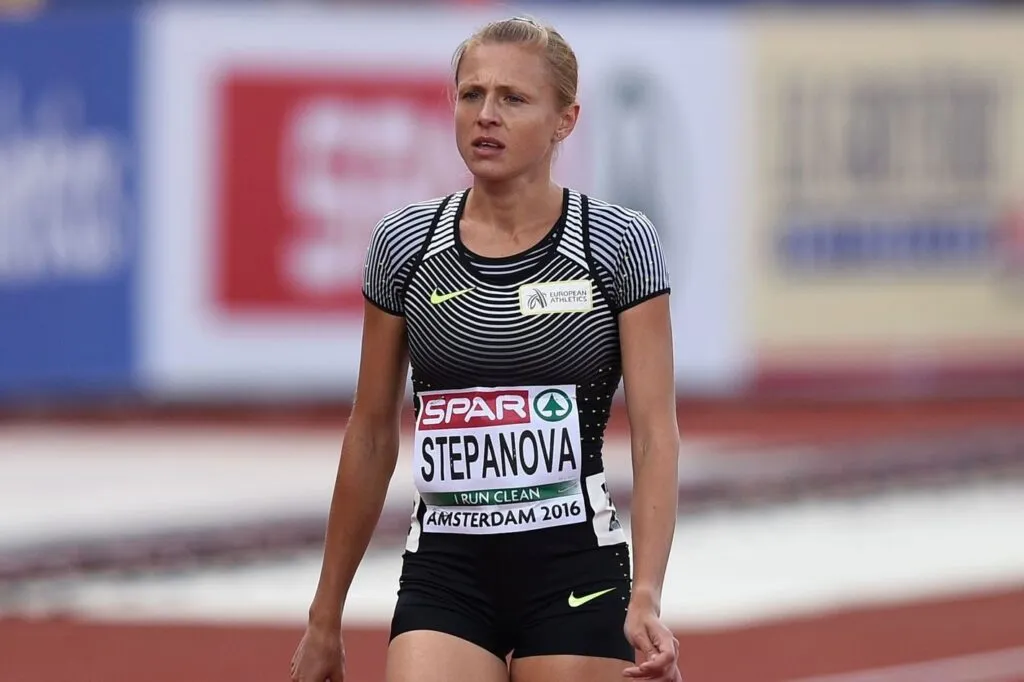
Yuliya’s eyes are opened and she finally starts to understand Vitaly. He tirelessly pursues his goal. Yet he’s frustrated, especially by WADA’s approach. A key moment is his meeting with WADA’s chief investigator Jack Robertson, along with the fact that from 2015 WADA will be able to investigate anti-doping work in other countries. Until then, investigations were the responsibility of each country. Even so, this is high politics with an uncertain outcome. Public pressure has to be created. Robertson proves a good strategist and “calls in” journalist Hajo Seppelt. He contacts the two heroes and work on the documentary begins. Spoken testimony isn’t enough, though; hidden camera footage is needed. How was all this footage of the leading figures of Russian doping filmed? You’ll find out in the book.
The book has a happy ending. The documentary is broadcast on Germany’s ARD and sets off a huge avalanche. The system falls. The idealist from the start of the book did it. The book quotes an old saying: “Of course we have freedom of speech in Russia. But the freedom ends immediately after the speech.” No wonder Vitaly, Yuliya and their one-year-old son had to flee Russia before the documentary was broadcast. It all resembles a chapter from Ian Fleming’s James Bond.
What’s strange about this whole “detective” story is that Vitaly and Yuliya are still alive at all. Robertson himself writes in the book that in his thirty-year career as an investigator he met plenty of informants. They all had a common denominator: money or revenge. Vitaly was different. He was a pure idealist. He wanted doping not to exist. That’s why nobody believed him. Maybe that’s also why he survived and could speak out. Getting rid of him later no longer made sense. Everything had been said.
Former RUSADA director Nikita Kamaev wasn’t so lucky. He contacted the author of this book asking for help writing his view of Russian doping. Kamaev died of a heart attack at the age of 52. Just eleven days earlier, his predecessor Vyacheslav Sinev had also died. Grigory Rodchenkov, one of the main architects of Soviet and Russian doping, is convinced both were murdered. Rodchenkov himself fled Russia and wrote a book with a surprising title: The Rodchenkov Affair: How I Brought Down Russia’s Secret Doping Empire.
The book is really worth reading. If you don’t have time, at least watch the documentary mentioned above.